

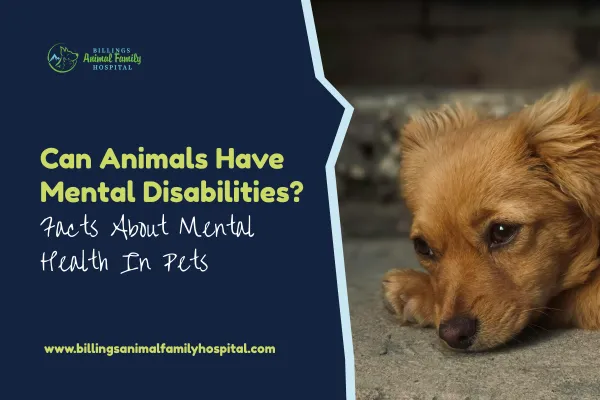
Can Animals Have Mental Disabilities? Facts On Pet Mental Health
Can Animals Have Mental Disabilities? Facts About Mental Health In Pets
As loving pet owners, we often notice when something feels “off” with our animal’s behavior. Maybe your dog seems unusually anxious, your cat shows repetitive habits, or your pet struggles to adapt to change. This leads many families to ask an important question: Can animals have mental disabilities?
The short answer is yes. Animals can experience mental health disorders, though they don’t look exactly like human conditions. Understanding these challenges helps pet owners provide better care and work closely with a trusted veterinarian to support their pet’s well-being.
What You'll Find In This Post . . .
Can Animals Have Mental Disabilities? Facts About Mental Health In Pets
Can animals have mental illness and disorders?
Common mental disorders in animals
2. Compulsive and obsessive behaviors
How pet owners can support animal mental health
1. Can animals have mental disabilities?
2. Are mental disorders in animals treatable?
3. How do I know if my pet has a psychological disorder?
4. What's the difference between mental health and psychological disorders in animals?
5. Should I see a veterinarian for behavioral issues?
Supporting your pet’s mental health starts with compassion

Can animals have mental illness and disorders?
Animals experience emotions, stress, and fear, all of which influence behavior. While animals don’t process thoughts the same way humans do, they can suffer from mental health disorders, including psychological disorders in animals, that affect their quality of life.
Some mental illnesses in animals are linked to genetics, trauma, medical conditions, or environmental stressors like captivity or sudden changes at home. In many cases, animals may show signs through behavior rather than words.
Recognizing this is a key part of animal psychopathology, the study of behavioral and mental disorders across species.

Common mental disorders in animals
Animals can experience mental health challenges that affect behavior, emotions, and daily functioning. These challenges often appear as changes in habits, reactions, or energy levels that may be easy to overlook at first.
1. Anxiety disorders
Anxiety disorders occur when an animal experiences ongoing fear or stress that interferes with daily life. Separation anxiety is common in dogs and may show up as excessive barking, destructive behavior, pacing, or attempts to escape when left alone. Loud noises, changes in routine, or past trauma can also trigger anxiety in animals.
Over time, untreated anxiety can worsen and affect both mental and physical health. A veterinarian can help determine whether behavior training, environmental changes, or medical support is needed.
2. Compulsive and obsessive behaviors
Some animals develop compulsive behaviors as a way to cope with stress, boredom, or underlying medical issues. These behaviors may include repetitive licking, chewing, tail-chasing, or pacing that the animal seems unable to stop. In some cases, this resembles obsessive-compulsive disorder, where the behavior continues even when it causes injury or discomfort.
Compulsive disorders are not “bad habits.” They are often linked to anxiety, pain, or neurological conditions. Veterinary guidance is important for identifying triggers and reducing long-term harm.
3. Depression-like symptoms
Animals can experience depression-like symptoms after significant life changes such as the loss of a companion, illness, injury, or major changes at home. Pets may sleep more than usual, lose interest in play, avoid interaction, or show changes in appetite. While animals don’t process emotions the same way humans do, these behaviors suggest emotional distress.
Depression-like symptoms often improve with routine, enrichment, and medical evaluation. Consult a veterinarian to exclude physical ailments and get advice on emotional support methods.
4. Cognitive dysfunction
Similar to age-related dementia in people, cognitive dysfunction is a condition most often observed in senior pets. Affected animals may seem confused, forget familiar routines, get stuck in corners, or become more vocal at night. Memory, awareness, and learning ability can decline gradually, making the changes easy to miss at first.
Although cognitive dysfunction cannot be cured, early diagnosis allows for management through diet, supplements, medication, and environmental support.

How pet owners can support animal mental health
Pet owners play a major role in helping animals lead stable, enriching lives. Small, thoughtful actions can protect both emotional well-being and long-term health.
Maintain consistent routines - Predictable schedules help animals feel safe and secure. Routine reduces stress by letting your pet know what to expect each day, especially during feeding, walks, and rest times.
Provide physical and mental stimulation - Regular exercise, play, and problem-solving activities help prevent boredom and frustration. Mental stimulation supports healthy animal behavior and lowers the risk of anxiety and compulsive habits.
Avoid prolonged isolation or confinement - Too much isolation can increase fear, stress, and loneliness in animals. Extended confinement may lead to behavioral disorders, especially in social species that thrive on interaction.
Address behavioral changes early - Sudden changes in behavior are often the first sign of a mental or physical health concern. Early attention allows animals to receive care before stress or discomfort becomes more severe.
Schedule regular veterinary checkups - Routine veterinary visits help identify hidden health conditions that may affect mental well-being. A veterinarian can rule out pain, illness, or neurological issues that may be influencing behavior.
Animals may not tell us when they’re struggling, but behavior is their language. Paying attention and responding with care can make a meaningful difference in your pet’s quality of life.

Frequently asked questions
1. Can animals have mental disabilities?
Yes. Animals can have mental disabilities that affect learning, behavior, and emotional regulation. These conditions vary by species and individual.
2. Are mental disorders in animals treatable?
Many mental disorders in animals can be managed with behavior modification, environmental changes, medical treatment, or alternative therapies.
3. How do I know if my pet has a psychological disorder?
Signs include sudden aggression, withdrawal, repetitive actions, excessive fear, or changes in appetite. A veterinarian should evaluate these symptoms.
4. What's the difference between mental health and psychological disorders in animals?
Mental health in animals refers to their overall emotional and behavioral well-being. In contrast, psychological disorders in animals are specific conditions where abnormal thoughts, emotions, or behaviors interfere with daily functioning and quality of life.
5. Should I see a veterinarian for behavioral issues?
Absolutely. Behavioral changes are often medical in nature. Early care leads to better outcomes.

Supporting your pet’s mental health starts with compassion
So, can animals have mental disabilities? Yes, and understanding this helps us become better caregivers. If you’ve noticed changes in your pet’s behavior or emotional well-being, don’t wait to seek guidance. Schedule a consultation with Billings Animal Family Hospital to discuss your concerns and explore personalized care options. Together, we can help your pet live a healthier, happier life — inside and out.