
Dog Dental Care Tips for Healthier Teeth and Gums
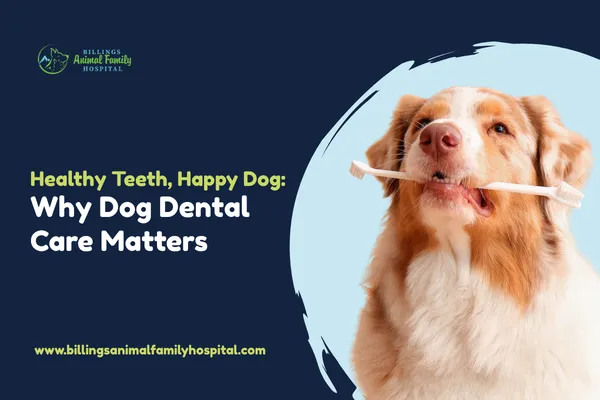
Healthy Teeth, Happy Dog: Why Dog Dental Care Matters
Dog dental care affects far more than fresh breath. A dog can look energetic, eat every meal, and still have painful dental disease hiding under the gumline. Because dogs are so good at hiding discomfort, oral problems often go unnoticed until they are advanced and harder to treat.
Dental health is closely tied to comfort, longevity, and overall wellness. When a dog’s mouth is healthy, they are more willing to play, chew, and interact. When it hurts, they may slow down, act cranky, or quietly adjust how they eat. At Billings Animal Family Hospital, we help pet owners in our community understand what is going on in their dog’s mouth so they can act early.
Dog dental care includes several pieces working together: brushing at home, regular dental cleanings under anesthesia, dental exams, and keeping an eye out for signs of disease. In this article, we will explain how dental problems start, what warning signs to watch for, what happens during a professional cleaning, and simple home habits that protect your dog’s smile.
What You'll Find In This Post . . .
Healthy Teeth, Happy Dog: Why Dog Dental Care Matters
How Dog Dental Problems Start and Why They Get Worse
Warning Signs Your Dog’s Teeth Need Attention Now
What to Expect From Professional Dog Dental Care
Simple at Home Habits to Protect Your Dog’s Smile
1. How often should I have my dog’s teeth professionally cleaned?
2. Can I use human toothpaste on my dog?
3. What is the Veterinary Oral Health Council (VOHC)?
4. What are the signs of periodontal disease in dogs?
5. Are dental treats or dental chews enough to maintain oral health?
Help Your Dog Enjoy a Healthier, Happier Smile

How Dog Dental Problems Start and Why They Get Worse
After your dog eats, a soft film of bacteria and food particles, called plaque, begins to coat the teeth. If it is not brushed away, that plaque hardens into tartar. Tartar is rough, and it irritates the gums, which can lead to gingivitis, or inflamed, sore gum tissue.
If gingivitis is not addressed, it can progress to periodontal disease. In periodontal disease in dogs, the structures that support the teeth are damaged. Gums may recede, pockets form around the teeth, and infection can set in. Over time, this can cause loose or lost teeth, chronic pain, and difficulty chewing. Learn more about periodontal disease in dogs.
Bacteria from long-standing dental infections can enter the bloodstream through inflamed gums. Once in the blood, they can travel to organs like the heart, liver, and kidneys. This is one way that chronic dental disease can affect overall health, not just the mouth.
Dogs rarely show obvious tooth pain at first. Many will keep eating the same amount, only making subtle adjustments such as chewing on one side or swallowing food more quickly. This is why regular dog dental care is so important, especially when combined with routine veterinary exams.
Certain dogs are at higher risk. Older dogs, small and toy breeds, dogs with crowded teeth, and those with soft, sticky diets tend to build up plaque faster. Genetics also play a role, and any dog without consistent at home dental care and periodic professional cleanings is more likely to develop problems.

Warning Signs Your Dog’s Teeth Need Attention Now
Even though dental disease can be hidden, there are common warning signs that your dog’s mouth needs attention. Some are easy to spot, while others are subtle.
Physical red flags include:
Persistent bad breath that you notice across the room
Red, swollen, or bleeding gums
Yellow or brown buildup on the teeth, especially near the gumline
Loose, broken, or missing teeth
Drooling, pawing at the mouth, or dropping food while eating
Behavior changes can also point to mouth pain. A dog that once loved tug toys may start ignoring them. Some dogs eat more slowly, avoid hard kibble, or prefer soft food. Others may become irritable when you touch their face or try to look in their mouth.
It is easy to shrug off bad breath as a normal dog smell, but it is usually a sign of bacteria and inflammation. Another common myth is that if a dog is still eating well, their teeth must be fine. Dogs are driven to eat, so they often keep going even with a significant disease.
Regular at-home mouth checks and routine veterinary exams help catch these issues before they become severe. If you notice any of these symptoms, it is time to have your veterinary dentist evaluate your dog’s oral health.

What to Expect From Professional Dog Dental Care
A professional dental visit is more than just a quick look at your dog’s teeth. At Billings Animal Family Hospital, a dental appointment starts with a full oral exam and a conversation about your dog’s history, diet, chewing habits, and any changes you have seen at home.
For a thorough cleaning and evaluation, we recommend anesthesia. While a dog is under anesthesia, we can examine every tooth and gum surface, take dental X-rays if needed, and clean both above and below the gumline. This is essential because the most serious disease often hides where you cannot see it.
The cleaning process generally includes:
Scaling to remove tartar above and below the gums
Polishing to smooth the tooth surface and slow future plaque buildup
Flushing the mouth to remove debris and bacteria
Carefully checking each tooth and the surrounding gum tissue
If we find damaged or infected teeth, we may recommend additional treatments. These can include dental X-rays to look at tooth roots, extractions of teeth that cannot be saved, and medications such as antibiotics or pain relief when appropriate.
We take safety seriously. Pre-anesthetic bloodwork helps us assess your dog’s overall health. During the procedure, trained veterinary care staff monitor vital signs with appropriate equipment and focus on comfort and pain management from start to finish.

Simple at Home Habits to Protect Your Dog’s Smile
The most powerful tool for dog dental care at home is regular tooth brushing. Using a dog safe toothpaste and a soft brush or finger brush, aim to clean the outer surfaces of the teeth where plaque builds up fastest.
If you are just getting started, keep it simple:
Begin by letting your dog lick a small amount of dog toothpaste from your finger
Gently rub along the outside of the teeth and gums for just a few seconds
Gradually add a soft toothbrush and lengthen sessions as your dog relaxes
Use calm praise and small treats to build a positive routine
Along with brushing, some additional tools can help support a dog's oral health. Dental chews that are approved by the Veterinary Oral Health Council, certain dental diets designed to scrub the teeth, water additives, and dental wipes can all play a role. These are helpful, but they are most effective when used with regular brushing, not in place of it.
Avoid unsafe home methods. Human toothpaste is not safe for dogs, because many formulas contain ingredients that can make them sick if swallowed. Very hard items, such as natural bones, antlers, or rocks, can crack teeth. Chews that you cannot easily press a fingernail into are often too hard for safe chewing.
Even the best home routine cannot replace professional cleanings and yearly wellness exams. When home care and veterinary care work together, your dog has the best chance at long-term oral health.

Frequently Asked Questions
1. How often should I have my dog’s teeth professionally cleaned?
Most dogs benefit from a professional dental cleaning once a year, but your veterinarian may recommend more frequent visits for older dogs or breeds prone to periodontal disease.
2. Can I use human toothpaste on my dog?
No. Human toothpaste contains ingredients that are unsafe for dogs. Always use dog-safe toothpaste approved for dog dental care.
3. What is the Veterinary Oral Health Council (VOHC)?
The VOHC evaluates dental products like chews and diets to ensure they are effective in reducing plaque and tartar. Products approved by VOHC are recommended as part of an at-home oral care routine. Learn more at VOHC.
4. What are the signs of periodontal disease in dogs?
Common signs include bad breath, yellow or brown tartar buildup, red or bleeding gums, loose teeth, and difficulty chewing. Dogs often hide pain, so regular checkups are essential.
5. Are dental treats or dental chews enough to maintain oral health?
Dental chews can help reduce plaque and tartar, but are not a replacement for daily brushing and annual professional dog dental care.

Help Your Dog Enjoy a Healthier, Happier Smile
Dog dental care protects far more than a nice-looking smile. Healthier teeth and gums mean fresher breath, less daily pain, and less strain on the heart, liver, and kidneys. Over time, this adds up to a more comfortable, active life with your family.
If you are ready to take the next step, schedule an appointment so we can evaluate your dog’s mouth and create a personalized dog dental careplan. At Billings Animal Family Hospital, we use gentle techniques to keep dental visits as stress-free as possible. Have questions or want to book a visit now? Schedule your dog dental care appointment today or call 406-245-4772 to speak with our staff and get started.