

Ferret Care Basics: What Does a Ferret Need?
Ferrets are playful, intelligent, and endlessly curious pets. But like all exotic animals, they require specialized care, attention, and an experienced ferret vet who understands their unique needs. If you've ever found yourself wondering, "What does a ferret need?" you're not alone.
This ferret care guide is designed to help new and experienced owners alike create a happy, healthy life for their furry little explorer. Whether you're just starting your journey or need a refresher, we've got you covered.
What You'll Find In This Post . . .
- Ferret Care Basics: What Does a Ferret Need?
- Understanding the basics of ferret ownership
- A proper enclosure: Safe, spacious, and stimulating
- Litter training and hygiene
- Ferret food: What should your ferret eat?
- Mental & physical stimulation
- Veterinary care for your pet ferret
- Frequently asked questions
- 1. What is the average lifespan of a ferret?
- 2. Do ferrets need to be bathed regularly?
- 3. Can I keep ferrets with other pets like cats or dogs?
- 4. How often should I clean the litter box?
- 5. Where should ferrets sleep?
- 6. Is it better to adopt a ferret in pairs?
- 7. Can I keep ferrets with other pets like cats or dogs?
- Final thoughts: Keep your ferret happy and healthy

Understanding the basics of ferret ownership
A pet ferret is not your average small animal. These mischievous mammals are obligate carnivores, which means their bodies are built to digest only animal-based proteins and fats. Feeding them anything other than high-protein, meat-based foods can lead to serious health issues.
Because of their natural instincts, ferret care should include both proper nutrition and mental stimulation. While ferrets sleep for 14–18 hours a day, they are highly active and curious when awake. They need daily playtime, regular supervision, and an enriched environment that supports their need to explore, climb, and burrow, just like they would in the wild.
Before bringing a young ferret home, it's important to understand:
- They require daily interaction and supervision.
- They need a safe, secure enclosure or cage.
- They must see a veterinarian who specializes in exotic pets.
Ferret ownership is a rewarding experience, but it does come with responsibilities. This ferret care guide will help you understand exactly what ferrets need to thrive.
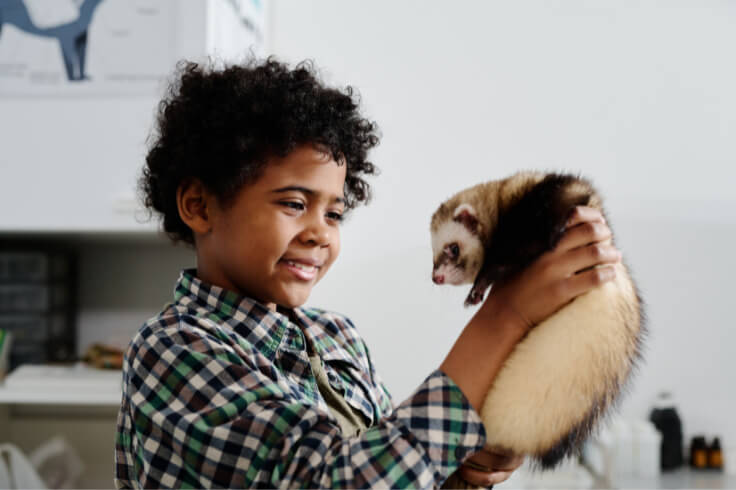
A proper enclosure: Safe, spacious, and stimulating
Your ferret's cage or enclosure should be more than just a holding area, it should feel like home. Ferrets need multi-level enclosures that allow climbing, hiding, and stretching. Look for cages with:
- Secure latches (ferrets are escape artists!)
- Multiple levels or platforms
- Tunnels, hideaways, and a hammock (yes, ferrets love hammocks!)
- Soft bedding and litter box
Use fleece or soft blankets for bedding. Spot clean daily and do a full clean weekly to prevent odor buildup.
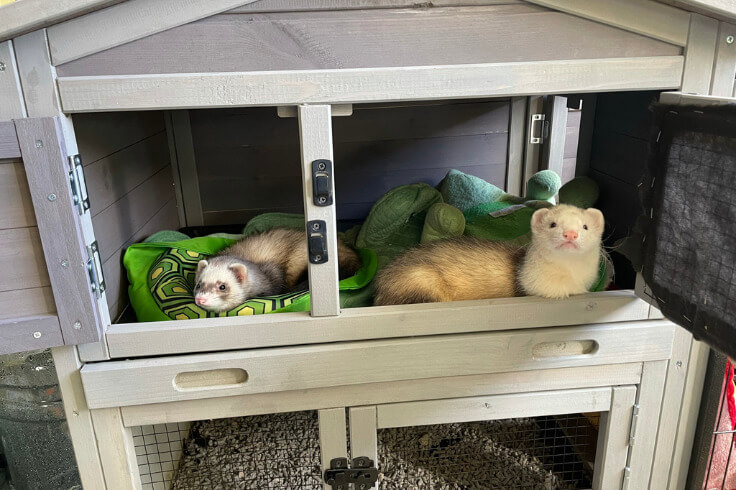
Litter training and hygiene
Yes, ferrets use litter boxes, but be patient. They tend to choose one or two corners of their enclosure to do their business. Here's what helps:
- Place a litter box in each corner.
- Use paper-based litter, not clumping cat litter since it's safer.
- Scoop daily and sanitize regularly.
And while some believe you need to bathe ferrets often, overbathing strips their skin of natural oils. A bath every few months, or when they're especially dirty, is enough. Always use ferret-safe shampoo and consult your ferret vet before trying new grooming products.

Ferret food: What should your ferret eat?
A healthy ferret diet is high in protein and fat, with little to no carbohydrates. As obligate carnivores, they thrive on meat-based foods. Here's what to feed:
- High-quality ferret food or kitten food (as recommended by your vet)
- Occasional raw or cooked meat treats
- Always provide fresh water
Avoid fruits, vegetables, and sugary treats as these can upset their digestive systems. A healthy ferret starts with proper nutrition!
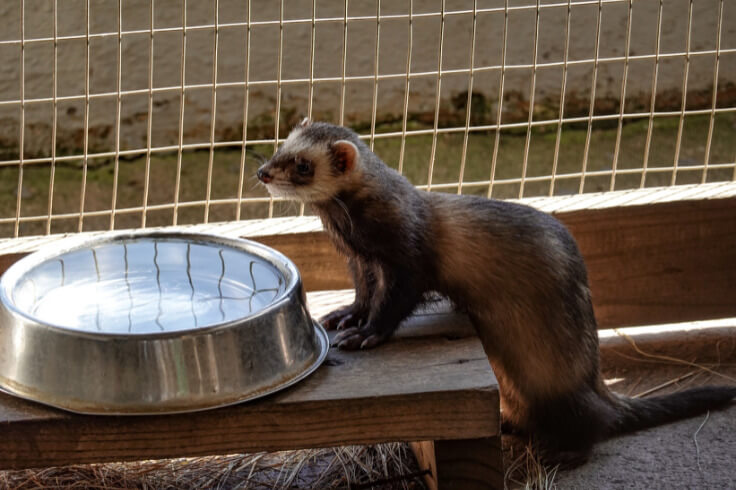
Mental & physical stimulation
Ferrets are endlessly curious and clever. Without stimulation, they can become bored or destructive. To keep your ferret mentally and physically engaged:
- Supervise at least 2–4 hours of playtime outside the cage daily
- Use toys, tunnels, and climbing items
- Rotate toys to keep things fresh
- Consider clicker training!
Ferret-proof your home before letting them explore. They can squeeze into tight spaces, chew cords, and open drawers.

Veterinary care for your pet ferret
Routine veterinary care is essential for all pets, ferrets included. Be sure to:
- Schedule annual wellness exams
- Discuss vaccines like rabies and distemper
- Ask about flea/tick and heartworm prevention
Finding an experienced ferret vet is crucial. At Billings Animal Family Hospital, we specialize in Exotic Pet Care and provide expert support tailored to the needs of ferrets.
Learn more about our Exotic Vet in Billings, MT and how we can support your pet's health throughout its life.

Frequently asked questions
1. What is the average lifespan of a ferret?
The average lifespan of a ferret is 6 to 10 years, though with proper care, some live longer. Understanding what does a ferret need from day one can help extend their life expectancy.
2. Do ferrets need to be bathed regularly?
No, frequent bathing can cause skin issues. Bathe your ferret only when absolutely necessary, and always use a shampoo designed for ferrets.
3. Can I keep ferrets with other pets like cats or dogs?
It depends on the animals' temperaments. While some ferrets like to play with cats or dogs, others may feel threatened. Always supervise interactions carefully.
4. How often should I clean the litter box?
Daily scooping is ideal. Ferrets are sensitive to odors, and a dirty litter box can lead to accidents elsewhere in their enclosure.
5. Where should ferrets sleep?
Inside their cage, they should have a cozy sleeping area, ideally a hammock or fleece-lined hideout. Remember, ferrets sleep most of the day, so comfort matters.
6. Is it better to adopt a ferret in pairs?
Yes! Ferrets are social animals. Adopting two can prevent loneliness, especially if you're not home all day.
7. Can I keep ferrets with other pets like cats or dogs?
Yes, but with caution. While some ferrets like to play with a cat and dog, it depends heavily on the temperament of each animal. Early socialization helps, but always supervise their interactions.
Final thoughts: Keep your ferret happy and healthy
Understanding what does a ferret need is the first step to becoming a great ferret owner. From proper housing and diet to veterinary care and enrichment, there's a lot to love (and learn) about these playful pets.
At Billings Animal Family Hospital, we treat your pets like family. Whether you're a new owner or looking for a reliable ferret vet, our team is here to help. Visit our Exotic Pets page to learn more, or call us directly at (406) 413-9503 if your ferret may need care.
Don't forget to download your Emergency Vet Contact Card, it could save your pet's life in an unexpected moment.